
REGULATIONS
LAW No. 32595
The National Genetic Profile Database is established as a tool to strengthen criminal investigations, human identification, and the search for missing persons
Law 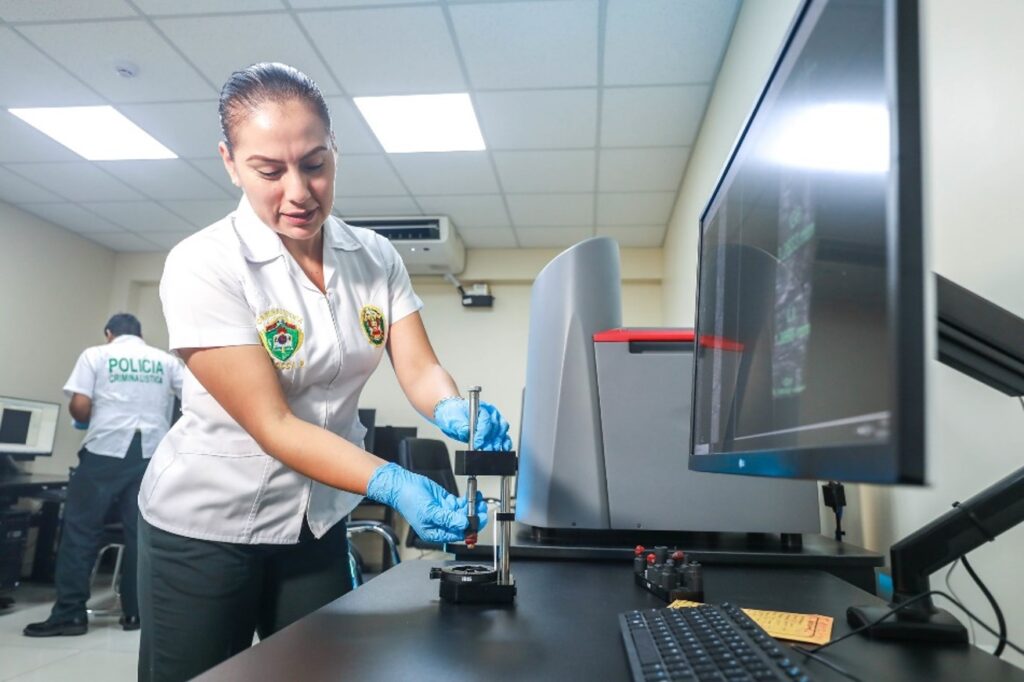 No. 32595 establishes the National Genetic Profile Database (BNDPG) as a technical and scientific tool designed to facilitate human identification through the use of genetic profiles obtained from non-coding DNA, primarily for the purposes of criminal investigation and the search for missing persons. The purpose of the law is to strengthen criminal prosecution and contribute to the resolution of crimes, while ensuring the protection of personal data, human dignity, and the fundamental rights of the individuals involved.
The BNDPG will be a confidential database and will be administered by a Board of Directors under the Criminalistics Directorate of the Peruvian National Police. It will also consist of various registries, including those for victims, persons under investigation and those facing prosecution, evidence, persons deprived of liberty, public servants, profiles submitted by foreign jurisdictions, as well as missing persons and their family members.
The law also regulates the collection of biological samples, establishing that, as a general rule, this must be carried out using non-invasive procedures. However, it will be mandatory in the case of persons under investigation and prison inmates, while in the case of victims and individuals who voluntarily enroll in the registry, prior written consent will be required.
Law No. 32617 Strengthens the Protection of the Rights of Children and Adolescents with Disabilities
The Congress of the Republic approved Law No. 32617, which amends certain provisions of the New Code on Children and Adolescents in order to align its content with a human rights and inclusion-based approach. Among the main changes, the law replaces terms that no longer meet current protection standards, incorporating the term “children and adolescents with disabilities” and expressly recognizing their full exercise of the rights to which they are entitled under the Convention on the Rights of the Child and national legislation.
Furthermore, the law reinforces the obligations of the State and society to guarantee equal opportunities for this group in areas such as health, education, sports, culture, and vocational training, through the provision of services and materials adapted to their needs. Similarly, Article 9 of the Code is amended to clarify the right of children and adolescents to freely express their opinions on all matters affecting them, without discrimination and in accordance with their age and level of maturity, thereby strengthening the mechanisms for participation and the protection of their fundamental rights.
CASE LAW
Appeal No. 3446-2022 – Ica
Supreme Court Clarifies Requirements for Recognition of Common-Law Marriages
The Permanent Civil Chamber of the Supreme Court, in Cassation No. 3446-2022 – Ica, clarified the elements that must be present for the judicial recognition of a common-law marriage pursuant to Article 326 of the Civil Code. The Court noted that this legal institution requires the concurrence of five requirements: (i) a voluntary union between a man and a woman, (ii) the absence of any impediment to marriage, (iii) a permanent and stable cohabitation aimed at fulfilling purposes and duties similar to those of marriage, (iv) a minimum duration of two continuous years, and (v) that the relationship be public and well-known to third parties. It also emphasized that the cohabitation must be characterized by exclusivity, precluding the existence of parallel relationships or current marital ties; It also included a reference to the ruling in Case No. 06572-2006-PA/TC, which adds that establishing a household implies that the couple shares a room, a bed, and a roof, effectively acting as spouses.
The ruling was issued in the context of a proceeding to recognize a de facto union in which the couple alleged they had lived together for more than fifty years. In ruling on the appeal, the Supreme Court concluded that the lower courts failed to conduct a comprehensive and integrated assessment of the evidence presented, thereby violating the requirement to provide a reasoned basis for judicial decisions and the right to due process.
Case No. 02031-2024-PHC/TC
The Constitutional Court Recognizes the Right to Care for Older Adults with Disabilities

The Constitutional Court recognized the right to care for older adults with mental disabilities as a fundamental right derived from human dignity and from Articles 4 and 7 of the Constitution.
In its ruling, the Constitutional Court specified that care measures must respect the individual’s status as a rights-holder and may not result in forms of isolation or permanent separation from their family and social environment.
The case originated in a habeas corpus proceeding challenging certain living conditions imposed on the beneficiary within his home, which unduly restricted his freedom of movement and contact with his family members. The Court noted that protective or care measures cannot entail disproportionate restrictions that affect dignity, personal freedom, or the ability to maintain emotional and social ties.
The ruling establishes criteria applicable to disputes involving older adults, disability, and intrafamilial care relationships, particularly regarding the constitutional limits on protective measures and family assistance.
NEWS
Judiciary Highlights Ruling Recognizing the Marañón River as a Subject of Rights at the Vatican
The president of Peru’s Judiciary, Janet Tello Gilardi, highlighted at an international forum held at the Vatican the role that the Peruvian judiciary has been playing in protecting the environment and addressing the effects of climate change. During her remarks, she highlighted various judicial rulings that have contributed to the protection of environmental and collective rights, including the ruling that recognized the Marañón River and its tributaries as subjects of rights, as well as decisions related to the protection of indigenous communities and the conservation of strategic ecosystems.
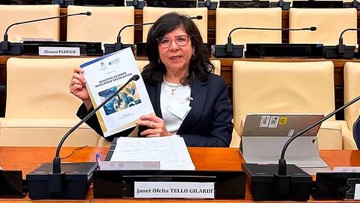
The judge noted that, although the Peruvian legal system does not have specific legislation on environmental resilience, there are various regulations and jurisprudential criteria that help strengthen environmental justice focused on the prevention, remediation, and mitigation of harm. She also highlighted institutional initiatives promoted by the Judiciary, such as the creation of specialized bodies, observatories on environmental case law, and mechanisms to ensure access to justice for vulnerable populations, reaffirming the judicial system’s commitment to incorporating environmental and climate standards into its judicial functions.
Leading our Litigation team are:
